- 7
- October
Arpan shah
For service businesses, this becomes increasingly important as teams, projects, clients, and workflows grow. A project update may sit in an email, an approval may happen in a chat, and a deadline may exist only in a manager's notes. Everyone may be working, but without shared visibility, understanding who owns what and where work stands becomes harder.
Transparent systems bring that information into the workflow itself.
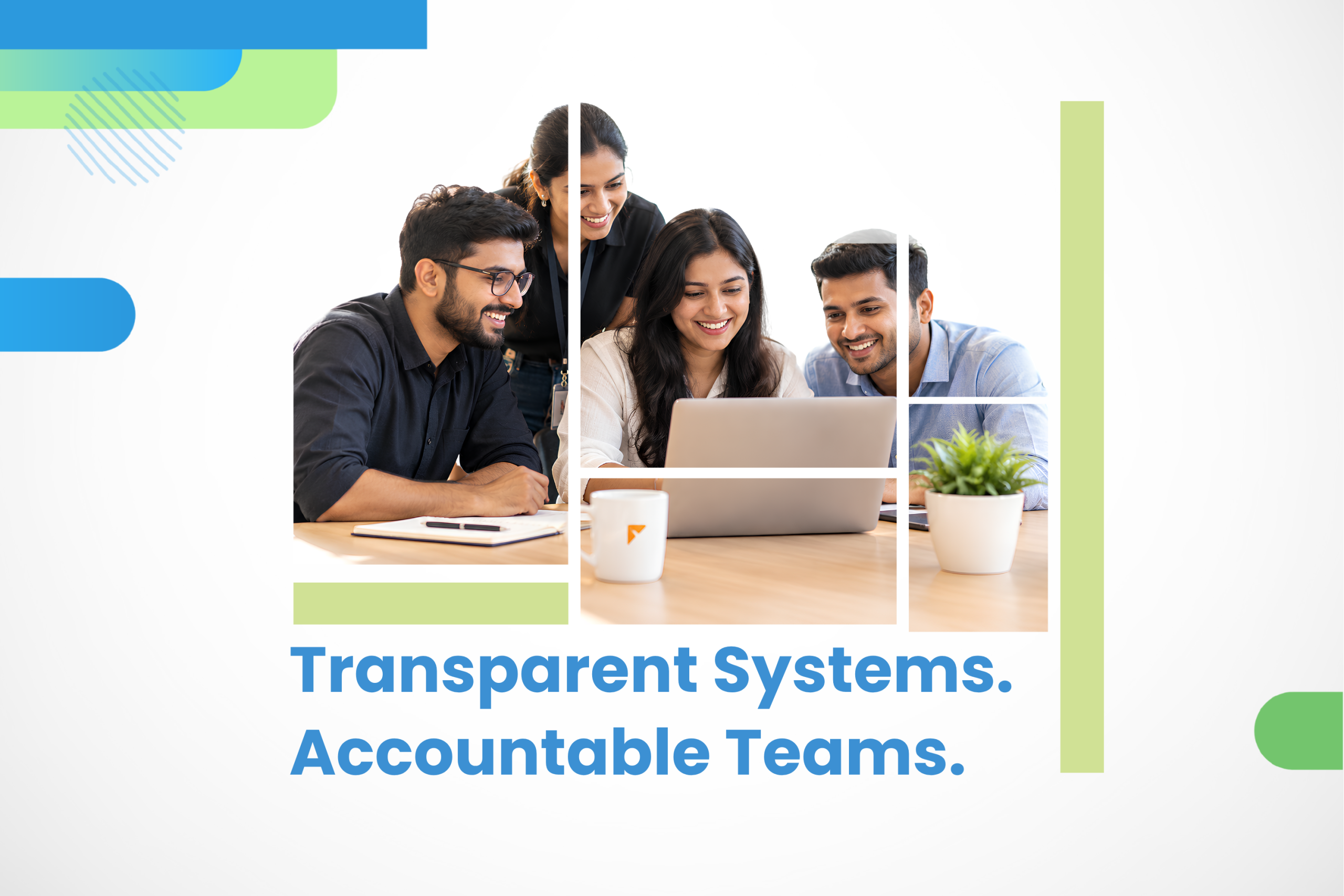
When responsibilities, deadlines, approvals, progress, and handoffs are visible, teams have the context they need to take ownership and follow work through to completion.
Team accountability is built through better operational visibility.
What Is Team Accountability in a Service Business?
Team accountability means creating clear ownership for the work that moves a service business forward.
It answers simple operational questions:
Who owns this task? What is the deadline? What is the current status? What is waiting for approval? What needs to happen next? Which team or person is responsible for the next step?
A task assigned to a specific owner, with a deadline, status, and connected workflow, creates clear accountability that a general team assignment cannot.
As service businesses grow, this clarity becomes increasingly valuable because more people are involved in delivering the same client outcome.
How Operational Transparency Builds Team Accountability
Operational transparency means giving people access to the information they need to understand and execute their responsibilities. It means making relevant work, ownership, progress, and decisions visible to the right people.- Making Responsibilities Visible
- Creating Visibility Into Project Progress
- Connecting Deadlines, Tasks and Ownership
- Documenting Decisions and Approvals
- Turning Accountability Into Part of the Workflow
Common Team Accountability Gaps in Service Teams
Accountability gaps often develop inside everyday workflows rather than through one major operational issue.- Tasks Without Clear Ownership
- Project Information Scattered Across Tools
- Approvals Hidden in Emails and Chats
- Handoffs Without Shared Context
- Limited Operational Visibility
- Manual Status Tracking
The Role of Workflow Management in Team Accountability
Workflow management creates structure around how work moves through a business. For service teams, that structure can connect tasks, people, deadlines, approvals, dependencies, and deliverables.- Creating Clear and Repeatable Workflows - A defined workflow gives teams a consistent way to move work from one stage to the next.
- Connecting Teams Across Projects - When multiple departments contribute to the same client engagement, connected workflows help everyone understand where their responsibility begins and ends.
- Making Handoffs and Dependencies Visible - Visible dependencies let a project manager see that an approval is pending, rather than discovering it through a follow-up message.
- Tracking Tasks From Assignment to Completion - Accountability becomes stronger when the entire journey of a task remains visible.
Operational Visibility Without Micromanagement
A transparent system gives teams access to the information they need to work independently. It helps managers understand progress without turning every update into a manual status meeting. A manager can see the current status of a project directly, rather than asking where it stands. The owner of a task is already visible, rather than needing to be tracked down. Teams can identify work that requires attention early, before it becomes a problem. Operational visibility gives people better context to make decisions and take action.What a Transparent Accountability System Should Include
A strong system for team accountability should make the operational picture easier to understand. Key capabilities include:- Clear Task Ownership — Every important task has a defined owner and responsibility.
- Real-Time Project Visibility — Teams can understand project progress, timelines, and current priorities.
- Workflow and Approval Tracking — Approvals and workflow stages remain visible and connected to the relevant work.
- Activity History and Audit Trails — Changes, actions, and decisions can be traced when teams need additional context.
- Cross-Team Visibility — Departments can see the information required to coordinate their part of the workflow.
- Resource and Capacity Visibility — Managers can understand workloads and available capacity when allocating work.
- Automated Updates and Notifications — Teams receive relevant updates without depending entirely on manual follow-ups.
How Bizio Strengthens Team Accountability
Bizio brings projects, people, workflows, and operational information into one connected environment for service businesses. Bizio makes visibility and ownership part of everyday operations.- One Connected View of Projects and Teams
- Clear Ownership Across Tasks and Deliverables
- Connected Workflows Across Departments
- Real-Time Operational Visibility
- Documented Approvals and Activity
A Practical Framework for Building Team Accountability
Technology supports accountability, and businesses also benefit from clear operating practices alongside it.- Step 1: Define Clear Ownership Every important deliverable should have a clearly identified owner.
- Step 2: Make Work Visible Give teams visibility into relevant tasks, priorities, deadlines, and progress.
- Step 3: Connect Team Handoffs Make dependencies and responsibilities visible when work moves between departments.
- Step 4: Document Decisions and Approvals Keep important decisions connected to the work they affect.
- Step 5: Track Progress Continuously Use operational visibility to understand progress throughout the project, not only at review points.
- Step 6: Improve Workflows Using Operational Insights Look at recurring delays, workload patterns, approval bottlenecks, and handoff gaps to improve the way work gets done.
Business Benefits of Stronger Team Accountability
When accountability becomes part of the operating system, the benefits extend beyond individual tasks.- Faster Decision-Making — Teams have access to the information required to act with greater clarity.
- Better Cross-Team Coordination — Departments can work from shared information and understand how their work connects.
- More Consistent Project Delivery — Clear ownership and visible workflows support more structured execution.
- Improved Resource Utilization — Better visibility into workloads and capacity helps managers allocate resources more effectively.
- Stronger Client Experience — Teams can respond to client needs with better access to current project and operational information.
- Greater Operational Scalability — Repeatable workflows and clear ownership help service businesses handle increasing complexity as they grow.