Arya patel
A growing service business can look healthy from the outside.
New clients are coming in. Revenue is increasing. The team is getting bigger. The sales pipeline looks promising. Then the operational questions begin.
Can the team actually deliver everything that has been sold? Are the right people available when projects start? Are billable hours being captured accurately? Can managers see which projects are profitable? Does finance have the information it needs to invoice on time?
This is where Service Business Growth becomes more than a sales or marketing objective.
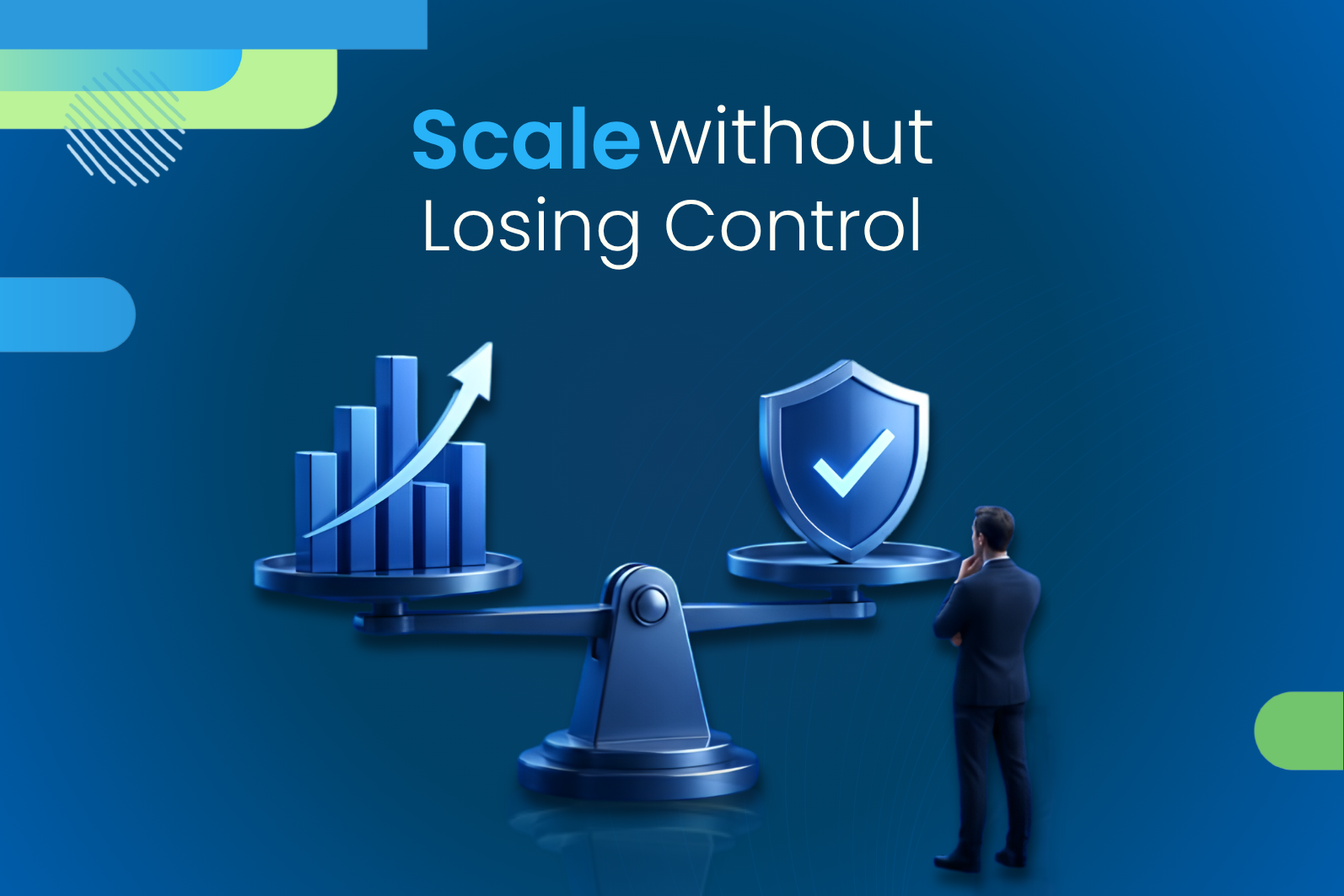
Growth creates more demand. Scaling means building the operational capacity to consistently handle that demand.
For service companies, that distinction matters because the product being delivered is often expertise, time, and human capacity. Adding customers without strengthening the systems behind delivery can increase complexity faster than profitability.
So, how to scale a service business
without turning every new client into an operational challenge?
It starts with an operating model built to grow alongside the business, not one that's patched together every time headcount jumps.
Growth Is Not the Same as Scaling
A service business can grow simply by taking on more work. Scaling is different.
If revenue increases by 30% but headcount, administrative work, project delays, and management overhead increase by roughly the same amount, the business has grown, but it has not necessarily become more scalable.
True scaling comes from creating repeatable systems that allow the business to handle greater volume while maintaining delivery quality, team productivity, and financial control.
Operational maturity is what turns growth into scaling. It's a growth strategy, not just an internal efficiency exercise.
Why Service Business Growth Puts Operations Under Pressure
Service companies have a unique scaling equation. More clients often mean:
- More projects running simultaneously
- More people to schedule and manage
- More dependencies between teams
- More hours to track
- More invoices to generate
- More scope changes to monitor
- More client expectations to manage
- More financial data to reconcile
Without connected processes, every increase in volume creates another layer of coordination.
Picture this: a sales team closes a deal on Friday. By Monday, the delivery team still hasn't received the project details. A project manager is watching a deadline close in, but finance has no visibility into the billable hours behind the work. Leadership sees revenue climbing without knowing that resource utilization or project margins are quietly moving the other way.
That gap is exactly what Service Operations Management is meant to close.
5 Operational Foundations for Scaling Service Businesses Efficiently
1. Build Repeatable Processes Before You Add More Volume
The first step in scaling service businesses efficiently is making the way work gets done repeatable.
Document the core journey from lead to delivery:
Lead → Deal → Project → Resource → Time → Invoice → Profitability
Every handoff should have a defined owner, expected information and next action.
Clear processes reduce dependency on individual employees and make it easier to train new team members as the company expands. When the path from lead to delivery is documented instead of tribal knowledge, growth stops depending on any one person remembering how things work.
2. Treat Resources as Billable Capacity
For a service company, people are not simply a headcount number.
Their skills, availability, allocation, utilization and billable time directly influence revenue and profitability.
That makes resource management for service companies a strategic function, not an HR checkbox.
Managers need to know:
- Who is available?
- Who has the right skills?
- Who is underutilized?
- Which projects need additional capacity?
- How much work is already committed?
- Where are upcoming capacity gaps?
Effective resource planning allows businesses to match the right people to the right work before capacity becomes a bottleneck. A firm that can answer these questions in real time rarely gets caught overcommitting a team that's already stretched thin.
3. Connect Sales With Delivery
One of the most overlooked operational challenges appears between closing a deal and starting the project.
Sales knows what the customer purchased. Delivery needs to know what was promised. Finance needs to understand how and when the work should be billed.
When these functions operate in separate systems, information can become fragmented, and the client is often the one who notices first.
Modern Service Business Software should connect these stages so that a closed opportunity can move naturally into project planning, resource allocation, time tracking and billing.
This creates continuity across the customer lifecycle instead of requiring teams to rebuild information at every stage.
4. Make Profitability Visible While Work Is Happening
Revenue tells you how much business you won.
Profitability tells you whether the business was worth doing.
For a growing service company, waiting until the end of a project or month to understand profitability can make corrective action difficult. By the time the numbers surface, the project is already closed and the margin is already lost.
Leaders should be able to connect:
Customer → Project → Resources → Hours → Costs → Revenue → Profit
ERP for Service Companies earns its place here, beyond what traditional accounting software covers.
A service-focused ERP approach brings operational and financial information together, helping businesses understand project performance, resource costs and billing in context, not as separate reports pulled from separate systems.
5. Automate the Work That Should Not Require Management Attention
Scaling does not mean automating everything.
It means identifying repetitive work that consumes valuable employee time and building reliable workflows around it.
Consider:
- Timesheet reminders
- Approval workflows
- Project updates
- Invoice preparation
- Payment follow-ups
- Resource allocation
- Management reporting
The objective is simple: let people spend more time delivering expertise and making decisions, while systems handle repetitive coordination. This is the core promise of Professional Services Automation done well: it connects workflows instead of just digitizing individual tasks one at a time.
What Should You Look for in the Best ERP for Service Businesses?
The best ERP for service businesses
should reflect the economics of a service company rather than simply adapting a manufacturing or inventory-centric model.
Look for capabilities that connect:
| Operational Area | What the Business Needs |
|---|
| Sales | Seeing which leads and deals are moving, and which are stalling |
| Projects | Tracking milestones, budgets and delivery in one place |
| Resources | Matching skills, capacity and utilization to real demand |
| Time | Capturing billable hours accurately, without chasing timesheets |
| Finance | Billing, collecting and understanding profitability as it happens |
| Leadership | Getting operational insight in real time, not at month-end |
Getting operational insight in real time, not at month-end
The real value comes from the connection between these areas.
A project is more useful when it knows which resources are assigned. A timesheet becomes more valuable when it connects directly to project costs and billing. Financial reporting becomes more meaningful when leadership can trace profitability back to customers, projects and resources.
Where Bizio Fits Into the Scaling Journey
This is the operational gap Bizio is designed to address. Bizio brings the core functions of a service business into one connected platform, covering lead and deal management, projects and milestones, resource allocation, timesheets, invoicing and collections.
Instead of treating sales, delivery, resources and finance as separate systems, Bizio connects the journey from lead to profit. For growing service businesses, that creates several practical advantages.
- Better resource visibility: Teams can allocate people according to skills, availability and project requirements.
- Connected project management: Projects, milestones, services and budgets can be managed within the same operational environment.
- More accurate billable tracking: Timesheets help turn employee effort into measurable billable inventory.
- Faster billing: Approved time and project milestones can feed into invoicing workflows.
- Profitability visibility: Leaders can examine profitability across resources, projects, customers and overheads rather than relying only on topline revenue.
The result is an operating model where growth becomes easier to manage, because the business can see how demand, capacity, delivery and profitability connect. If you're weighing whether your current setup is holding you back, here are [5 Signs Your Service Business Needs an All-in-One Platform].
Scale the Business Without Scaling the Chaos
The goal of service business growth is not simply to win more customers.
It is to build a business capable of serving more customers consistently, profitably and predictably. That requires more than hiring additional people or adding another tool.
It requires repeatable processes, intelligent resource management, connected workflows, accurate time tracking and real-time visibility into profitability. The right technology can bring those pieces together.
For service companies preparing for their next stage of growth, Bizio provides a unified operational foundation that connects the journey from lead generation to delivery and financial performance. Because the strongest service businesses do not simply grow bigger.They build operations that are ready to grow with them.
2
2