Arpan shah
A client asks for a project update. Your team checks multiple systems, confirms timelines internally, and responds three hours later. The answer is accurate, yet the delay signals something deeper. The business is working, but execution is not fully visible.
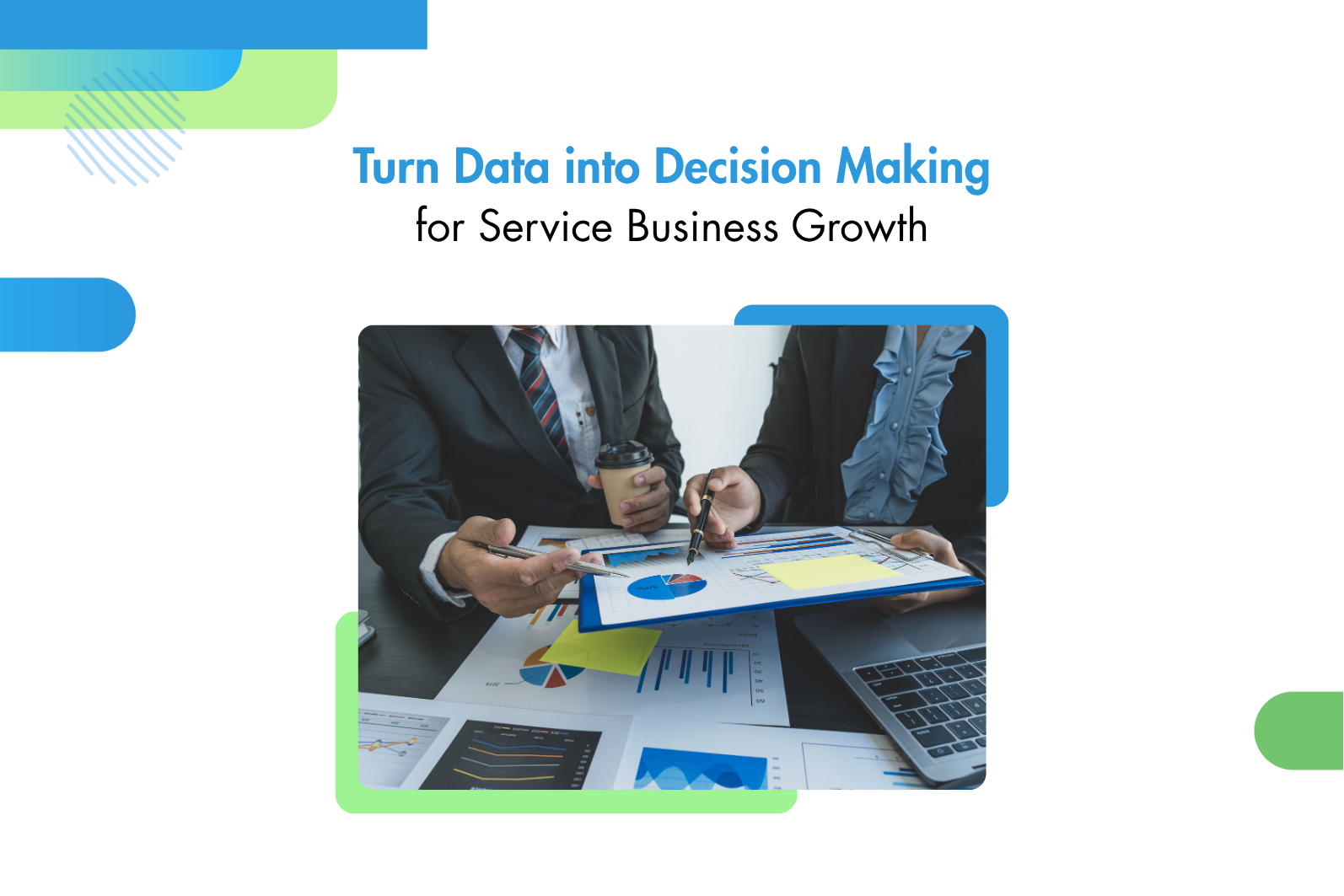
Data-Driven Decision Making for Service Businesses is no longer optional. In modern service organizations, decisions based on assumptions lead to delays, inefficiencies, and missed opportunities. To improve service business performance, companies need real-time visibility into operations, resource utilization, and customer interactions.
Improving performance in this environment does not come from increasing effort. It comes from improving clarity. Data-driven decision making (DDDM) enables service businesses to see how work is actually progressing, identify risks early, and make informed decisions with confidence.
Why Data Matters in the Service Business Today
Service businesses operate through people, processes, and ongoing client interactions. As operations grow, the volume of work and coordination increases exponentially. Relying on "gut feel" or experience alone becomes impossible when multiple teams, projects, and shifting priorities are involved.
Without structured insight, leaders depend on periodic reports or manual updates to understand performance. This creates a "knowledge lag." By the time an issue becomes visible in a monthly report, it often requires expensive, reactive intervention. Data-driven operations reduce this gap, allowing leaders to understand execution as it happens.
What Data-Driven Decision Making Really Means
DDDM is often misunderstood as simply "collecting more data." In practice, it is about using relevant operational signals to guide action.
The distinction is critical:
- Historical Reporting: Telling you what happened last month (e.g., total revenue).
- Operational Insight: Telling you what is happening now (e.g., a project is stalled at the approval stage, risking a deadline).
For service businesses, data becomes valuable when it reflects current activity, task progress, workflow movement, and resource allocation, to support timely action.
Common Operational Challenges That DDDM Solves
Many service businesses face "invisible" hurdles as they scale:
- Execution Blindspots: Work moves across teams, but leadership has no single view of the status.
- Accountability Gaps: Ownership becomes unclear during handoffs, leading to dropped balls.
- Invisible Cost Drivers: Excessive internal meetings, repeated rework, or "scope creep" that drains margins without being tracked.
Data-driven operations address these by making execution visible and measurable, creating a clear "paper trail" for every project.
Sources of Operational Data
Operational data is already present within your organization, but it is often trapped in silos. To get a complete view, you must connect:
- Project Performance: Timelines and task completion rates.
- Resource Utilization: How team capacity is actually distributed versus planned.
- Client Engagement: Response times and feedback loops.
- Financial Signals: Revenue leakage and "work in progress" (WIP) value.
How Data-Driven Decisions Improve Performance
- Faster and More Accurate Resource Allocation
When leaders can see real-time workloads, they can prevent burnout by shifting tasks from overloaded teams to those with capacity. This ensures consistent delivery quality.
- Reduced Cost Through Process Improvement
Data highlights patterns of friction. If a specific type of project consistently requires 20% more coordination than others, you can identify the root cause—whether it’s a vague onboarding process or a resource skill gap—and fix it.
Data provides early warning signals. Stalled approvals or a dip in task velocity indicate risks long before they impact the final delivery or the client relationship.
- Enhanced Customer Experience
Accurate, real-time data allows teams to respond to clients with absolute confidence. Updates are based on execution reality rather than optimistic assumptions, building long-term trust.
Operational vs. Financial KPIs: What to Track
Financial metrics show results, but operational KPIs guide improvement. Service leaders should track a balance of both:
| Metric Category |
Key Performance Indicator (KPI) |
Why it Matters |
| Execution |
Task Velocity / Lead Time |
Measures how fast work moves from start to finish. |
| Efficiency |
Resource Utilization Rate |
Ensures team members are productive but not burned out. |
| Quality |
Rework Percentage |
Identifies where processes are failing to meet standards. |
| Outcome |
Project Profit Margin |
Tracks the ultimate financial health of the service. |
Integrating Data Without Overload
The goal is not to drown in dashboards, but to achieve exception-based visibility. Effective systems focus on relevance highlighting delays, risks, or deviations that require human attention. This prevents "data paralysis" and ensures that leaders focus their energy where it has the most impact.
Technology Considerations for 2026 and Beyond
In today’s landscape, a service business needs more than just a project manager; it needs an Operational Intelligence Platform. Key requirements include:
- Connected Workflows: Data must flow automatically between sales, delivery, and finance.
- Audit Trails: Clear ownership of every action to ensure accountability.
- Integration Readiness: The ability to sync with CRMs, communication tools, and HR systems.
- Scalability: As you grow, your data must remain reliable and protected by enterprise-grade security.
Common Pitfalls to Avoid
- Vanity Metrics: Tracking things that look good on paper but don’t drive action.
- Data Without Context: Knowing a project is late is useless unless you know why (e.g., a pending client approval).
- Ignoring the People: Data should empower teams, not micromanage them. It must be linked to a culture of accountability.
The Strategic Value of Data-Driven Operations
As we move through 2026, the gap between "intuitive" and "data-driven" organizations is widening. Businesses that understand their operations in real time can scale efficiently, maintain margins under pressure, and pivot quickly to meet market demands.
Conclusion: Turning Data into Decisions
Data-driven decision making is the foundation of modern service excellence. It connects daily work with business outcomes, replacing uncertainty with clarity.
Platforms like Bizio support this journey by providing a unified view of operations, enabling accountability, and connecting workflows into a single source of truth. By turning operational signals into actionable insights, service businesses can move from reactive management to confident, data-driven execution.
Ready to see your operations in a new light? Explore how Bizio powers data-driven growth.