Arpan shah
A service deal closes in the CRM. Delivery receives part of the scope over email. Project updates live in a task tool. Hours are tracked in spreadsheets. Client conversations continue in chat. Each team believes it is organized. Yet no single system reflects the full picture of execution.
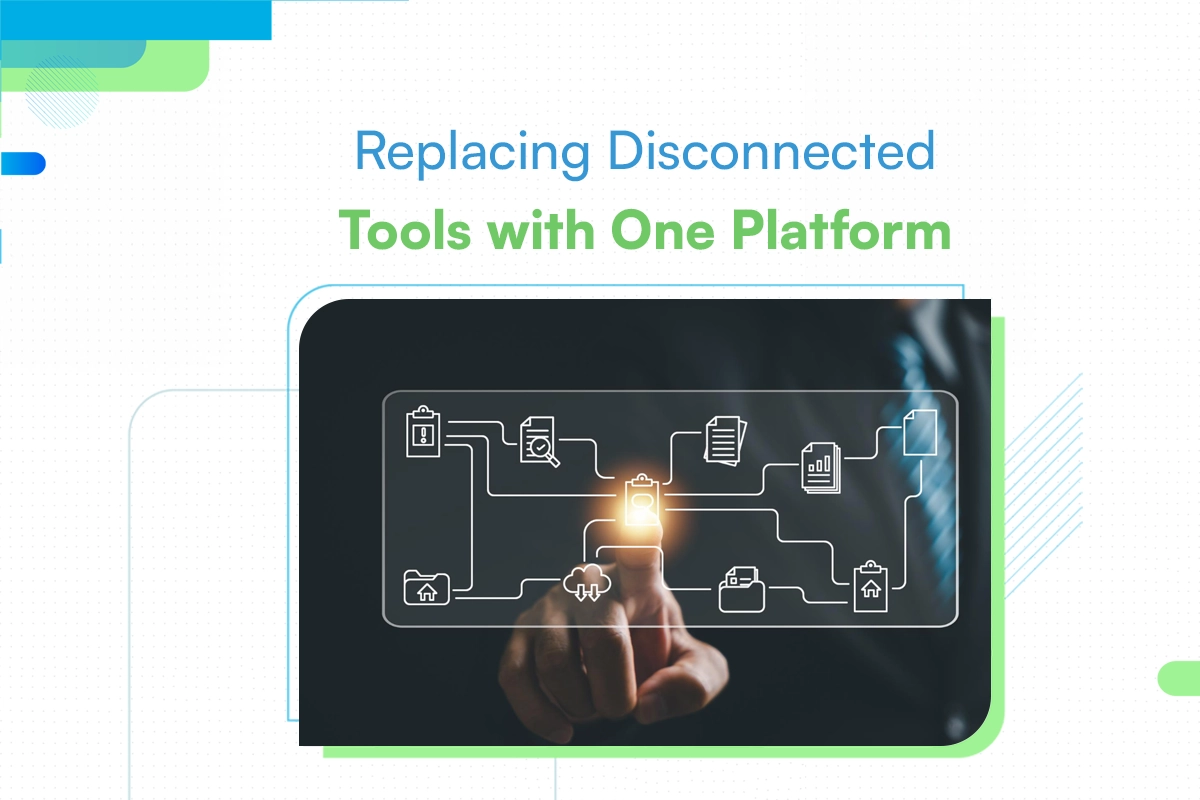
This fragmentation is why all-in-one service management platforms are replacing disconnected tools.
Introduction: The Hidden Cost of Tool Fragmentation
Over time, service businesses adopted specialized software for each function. Sales optimized for pipeline visibility. Delivery adopted project tools. Finance relied on accounting systems. Collaboration shifted to messaging platforms. Each tool solved a specific need.
The problem emerges at the operational level. When information flows across multiple systems without a unified execution layer, visibility weakens. Accountability becomes difficult to trace. Reporting depends on manual consolidation rather than system intelligence.
At a small scale, this arrangement feels manageable. As the business grows, coordination overhead increases faster than capacity. Leaders begin spending more time reconstructing status than steering performance.
The Operational Reality of Disconnected Tools
1. Ownership Gets Lost Across Platforms
In a fragmented environment, responsibility is often implied rather than defined. A client change discussed in a meeting may be referenced in chat but never formally captured in the delivery workflow. Tasks move forward without a clear, system-defined owner.
During cross-functional handoffs, the risk intensifies. Sales commitments may not fully transfer into delivery plans. Approvals sit in inboxes without visibility. Managers intervene to clarify what the system should have already made clear.
The result is not a dramatic failure. It is an incremental delay, reduced trust in timelines, and leadership time absorbed by coordination.
2. Data Lives in Silos
Disconnection between tools leads to siloed data. Whether it is sales performance, project progress, financial tracking, or client communication, each is stored in a separate environment. In order to see the big picture, the teams have to export and manually reconcile the data.
Such a procedure hampers the speed of decision-making and is prone to mistakes. Most of the time, leaders are only able to make decisions based on a partial or outdated vision since no single source gives a reflection of the real-time execution across the business.
The more complex it becomes to make strategic decisions, the less coherence there is in the operational data.
3. Tool Sprawl Increases Coordination Overhead
Each new system added is yet another source of friction. To keep aligned, teams update one another by duplicating changes across platforms. Due to a lack of visibility in the systems, status meetings are held. Instead of automated workflow triggers, follow-up messages are used.
Coordination becomes a hidden cost of productivity. While the organization seems busy, a large part of the effort is to manage tools rather than to create value.
4 Customer Experience Becomes Inconsistent
The internal breaks, undoubtedly, have an impact on the external experience. The client, facing teams get contextual information from different sources. Thus, depending on which system an employee uses, the responses will vary.
When customers are given contradictory information or their questions are answered late, they lose trust. Most of the time, people are not satisfied with the quality of the service, but rather the communication is based on the gaps in the operations that are disconnected.
Why Consolidation Is Accelerating Now
Service businesses are under a lot of pressure to prove their execution discipline. Clients demand timely updates, clear ownership, and consistent delivery. Competitive bids typically need proof of operational control, not just technical capability.
Besides that, margin pressure does not allow inefficiency to be tolerated anymore. On the one hand, manual reconciliation and coordination overhead reduce profitability without improving the results. On the other hand, growth makes these weaknesses more visible. What was enough for a small team becomes, at large, a hardly manageable problem.
Consolidation is becoming a trend because companies realize that having a lot of tools at their disposal is not the same as being operationally mature. A unified approach gives structural clarity rather than a series of band-aid fixes.
What an All-in-One Service Management Platform Actually Solves
An all-in-one service management platform does more than combine features. It establishes a shared execution layer across the organization.
Ownership is mapped inside the system, thus enabling the tracking of tasks, approvals, and decisions. Sales, delivery, and finance are interconnected by workflows in such a way that commitments become actions without human intervention. Information goes along a single framework; thus, the necessity for reconciliation is greatly reduced.
Decision makers can monitor the status and risk at the moment of the truth. Instead of informal follow-ups, the teams use the established processes. The point is not to simplify at any cost but to bring about operational coherence.
Before vs After: Fragmented Stack vs Unified Platform
Before consolidation, operations often feel busy yet fragile. Teams manage multiple logins and reconcile information manually. Risks surface late because no system consistently tracks them. Leadership discussions focus on clarifying status rather than improving performance.
After consolidation, execution becomes transparent. Ownership is explicit, progress is visible, and reporting reflects connected data. Instead of stitching together insights, leaders access a reliable operational view that supports confident decisions.
The difference lies in structural control.
Customer Experience Impact of Unified Operations
When internal Business Operations operate from a unified system, the customer experience naturally improves. Teams respond with context rather than searching across platforms. Updates are grounded in current execution data, not memory or assumptions.
Consistency strengthens trust. Clients experience smoother communication because the organization shares a common operational reference point. The alignment between internal execution and external communication becomes visible.
Operational Efficiency and Margin Protection
A single platform eliminates the need to do the same work multiple times. For instance, if you update your information, you write it only once, and it does not have to be re-entered in another system. Time spent on following structured workflows, getting approvals, and doing follow-ups is automatically accounted for. Rework decreases as processes are tracked and made visible.
Executives obtain a much better understanding of how resources are being utilized, which allows them to forecast more accurately. You protect margins by removing customer or employee pain points rather than by loading them with more tasks. Operational discipline is the basis for sustainable growth.
Key Capabilities to Look for in an All-in-One Platform
Consolidation should facilitate service delivery, not just lessen the number of applications. Good platforms establish roles, based responsibilities, record actions automatically, and allow different department teams to see their shared workflows.
Integrated reporting should show up, to, date operational data without requiring manual exporting. Scalability guarantees that the system stays functional when the number of employees or clients grows. Security and access control should be a fine balance between safeguarding confidential information and facilitating collaboration.
The right platform will bolster thoroughness within the entire company.
Implementation Considerations
Moving to a unified system is not easy and requires very careful thinking. You should consider how the new system will work with your existing CRM and financial tools so that you don't lose what you already have. Data transfer must be done in such a way as not to lose any data.
Just as important is dealing with change positively. It is very important for people to get it that the whole thing is being revolutionized, with accountability becoming a system, driven instead of informal. Good communication is the key to keeping the change in place and is the secret to long-term success.
The Strategic Shift: From Tool Collection to Execution System
Service companies are now shifting their focus from mere tool management toward execution management. A set of applications may help with individual tasks, but they are not able to create organizational harmony by themselves.
An integrated platform is accountable as a basic element.
It allows the senior management to quite accurately monitor performance and make decisions, hence respond continuously, by keeping execution data in one place.
This transformation signifies a functional change in the structure of service operations management.
Conclusion: Consolidation Is Not About Tools — It’s About Control
Unconnected tools hardly ever lead to a company's sudden collapse. Their effects gradually build up through, for example, unclear ownership, late decision-making, and invisible inefficiencies.
Unified
service management platforms solve this issue by forming a single execution environment.
Bizio, for example, helps service teams to operate with visibility, accountability, and workflow discipline constantly.
Issues are no longer related to the number of tools a company has but to whether those tools are a consistent system that facilitates growth.
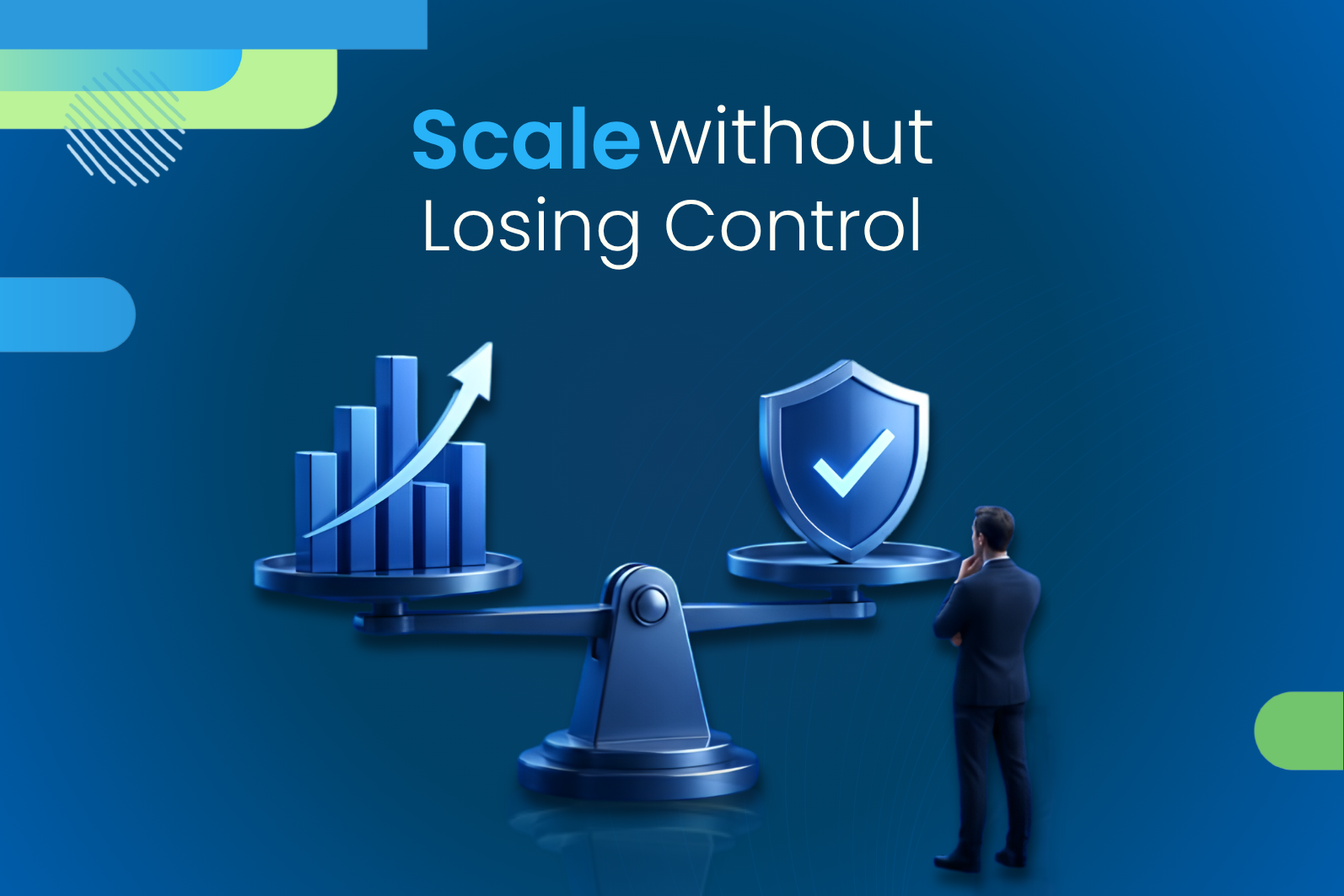
Those organizations that transition from scattered stacks to consolidated execution platforms will be able to enjoy scalable, controlled, and predictable performance.